

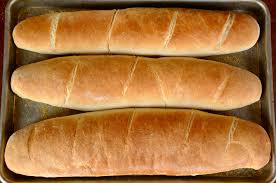
Italian bread is not one loaf but a family of regional breads, from oily Ligurian focaccia to crisp Roman rosetta rolls and dense durum-wheat loaves from Puglia. In the US, “Italian bread” usually means a long, crusty white loaf with a soft, open crumb. A food processor is one of the fastest ways to make that dough at home: it mixes and kneads in about a minute, and with the right technique the results rival a stand mixer.
Below you will find a guide to the best-known Italian breads, a tested-style method for a classic Italian loaf in the food processor, and a food-processor ciabatta, plus the mistakes that most often ruin processor doughs.
What makes a bread “Italian”?
Most traditional Italian breads share a short ingredient list: flour, water, salt and a leavening (commercial yeast or a starter, often a pre-ferment called a biga). Olive oil appears in some styles, such as focaccia, but many everyday loaves contain no fat at all. What changes from region to region is the flour (soft wheat in the north and center, durum wheat semolina in the south), the hydration, the shape and the baking method.
American-style Italian bread, the kind sold in supermarkets and neighborhood bakeries, is closer to a lean French-style loaf. It is often slightly enriched with a little sugar or oil for a softer crumb and sometimes topped with sesame seeds.
Popular types of Italian bread
Focaccia
Focaccia is a flat, oven-baked bread closely associated with Liguria in northwestern Italy. The dough is similar to pizza dough but is pressed into an oiled pan, dimpled with fingertips and finished with olive oil and coarse salt, sometimes with rosemary, olives or onions. It works as a side for soup, a snack on its own or a sandwich bread when split horizontally. If you want to watch the dimpling and oiling technique before trying it, this video walkthrough shows a home focaccia from start to finish: https://www.youtube.com/watch?v=eF5tjG2XI3Y
Pizza bianca
Pizza bianca (“white pizza”) is a Roman street-food staple: a long, thin slab of dough baked with olive oil and salt but no tomato sauce. Roman bakeries sell it by weight, and locals often split it and fill it with mortadella or prosciutto. It is thinner and crisper than Ligurian focaccia, with a chewy interior.
Ciabatta
Despite its rustic look, ciabatta is a modern bread. It was developed in 1982 by baker Arnaldo Cavallari in Adria, in the Veneto region, as an Italian answer to the popularity of French baguettes. The name means “slipper,” a nod to its flat, elongated shape. Ciabatta dough is very wet, which produces the large, irregular holes and thin crisp crust that make it a favorite sandwich and panini bread.
Rosetta
The rosetta is a small, crisp roll stamped with a pattern that resembles a rose. Its interior is mostly hollow, which makes it ideal for stuffing with cold cuts. In Rome it is called rosetta, while in Milan and much of Lombardy the similar roll is known as michetta.
Filone and pane casereccio
Filone simply describes a long, torpedo-shaped loaf, the shape most Americans picture when they hear “Italian bread.” Pane casereccio means “homestyle bread,” a broad term for rustic country loaves with a thick crust and a chewy crumb. One well-known version, Pane Casareccio di Genzano from the hills southeast of Rome, carries the European Union’s protected geographical indication (IGP) status.
Pane di Altamura and pane di Laterza
Puglia, in the heel of Italy, is known for large loaves made from re-milled durum wheat semolina. Pane di Altamura holds protected designation of origin (DOP) status, and the nearby town of Laterza has its own traditional durum loaf. These breads have a golden, slightly sweet crumb and a thick crust that keeps them fresh for days.
Gubana
Gubana is a sweet, spiral-shaped bread from Friuli-Venezia Giulia in northeastern Italy, especially the Natisone valleys near the Slovenian border. A rich yeast dough is rolled around a filling of walnuts, raisins, pine nuts and often a splash of grappa, then coiled like a snail before baking. It is traditionally served at Easter and other holidays, and it is related to similar filled breads across the border in Slovenia.
Taralli
Taralli are crunchy, ring-shaped snacks from southern Italy, particularly Puglia. The dough typically includes white wine and olive oil, and fennel seed is one of the classic flavorings. Taralli are briefly boiled before baking, a step that gives them their distinctive crisp, slightly glossy finish.
Friselle
Friselle (also spelled frise) are twice-baked rings of bread, also from Puglia. They are rock hard until you dip them briefly in water, after which they soften enough to top with chopped fresh tomatoes, olive oil, salt and oregano. Because they keep for weeks, they were historically a staple for fishermen and farm workers.
Why use a food processor for bread dough?
A food processor develops gluten through high-speed cutting and folding rather than slow stretching. The upside is speed: a lean dough that needs 8 to 10 minutes of hand kneading comes together in roughly 45 to 60 seconds. The trade-offs are worth knowing before you start:
- Heat build-up. The fast blade warms the dough. Use cool tap water rather than warm water when using instant yeast, and do not run the machine longer than needed.
- Capacity. Most home processors handle about 3 to 4 cups of flour at a time. Check your manual for its maximum dough load; overloading strains the motor.
- Blade choice. Many bakers get the best results with the standard metal blade. Some machines include a plastic dough blade, which works too but can take longer.
- Add liquid with the motor running. Pour water through the feed tube in a steady stream so the dough forms a ball instead of sticking in clumps.
Classic Italian bread recipe in the food processor
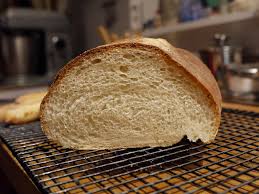
This makes one large filone-style loaf or two smaller ones with a crisp crust and soft crumb. Weights are given because they are more reliable than cup measures.
Ingredients
- 3 1/4 cups (about 400 g) bread flour or all-purpose flour
- 2 1/4 teaspoons (one 1/4-ounce packet) instant yeast
- 1 1/2 teaspoons fine salt
- 1 teaspoon sugar (optional, for a softer, browner crust)
- 1 tablespoon olive oil
- 1 1/4 cups (about 285 g) cool water
- Sesame seeds and an egg wash or water for the top (optional)
Method
- Mix the dry ingredients. Add flour, yeast, salt and sugar to the processor bowl fitted with the metal blade. Pulse 4 or 5 times to combine.
- Add the liquids. With the motor running, pour the oil and water through the feed tube. Process until the dough forms a ball that rides around the blade, then continue for about 45 seconds more. The dough should be smooth, slightly tacky and stretchy. If it is too dry and crumbly, add water a teaspoon at a time; if it sticks to the bowl walls, add flour a tablespoon at a time.
- First rise. Turn the dough onto a lightly floured counter, knead a few strokes by hand to even it out, and place it in an oiled bowl. Cover and let it rise at room temperature until roughly doubled, usually 1 to 1 1/2 hours.
- Shape. Press the dough into a rectangle, roll it up tightly from the long side and pinch the seam closed. Roll it gently into a 14- to 16-inch log with tapered ends and place it seam-side down on a parchment-lined baking sheet.
- Second rise. Cover loosely and let it rise until puffy, about 45 minutes. Meanwhile, heat the oven to 425°F with a rack in the middle.
- Score and bake. Brush with water or egg wash, sprinkle with sesame seeds if using, and cut three or four diagonal slashes about 1/2 inch deep. Bake 25 to 30 minutes, until deep golden and hollow-sounding when tapped underneath. An instant-read thermometer should show about 200 to 210°F in the center.
- Cool. Let the loaf cool on a rack for at least 45 minutes before slicing so the crumb can set.
For a crisper crust, place an empty metal pan on the bottom rack while the oven heats and pour a cup of hot water into it right after the bread goes in. The steam keeps the surface soft long enough for the loaf to expand fully.
Food processor ciabatta
Ciabatta dough is too wet to knead by hand comfortably, which is exactly where a food processor shines. Plan for a longer, slower rise, since much of ciabatta’s flavor and open crumb comes from time.
Ingredients
- 2 cups (about 250 g) bread flour
- 1 teaspoon fine salt
- 1/2 teaspoon instant yeast
- 1 cup (about 200 to 210 g) cool water
- 1 tablespoon olive oil, plus more for the container
Method
- Pulse the flour, salt and yeast in the processor to combine.
- With the motor running, add the water and oil through the feed tube and process for 45 to 60 seconds. The dough will be sticky and loose, more like a thick batter that pulls into strands than a firm ball. That is correct.
- Scrape the dough into an oiled container, cover and let it rise for about 3 hours at room temperature. Every 30 minutes during the first 90 minutes, wet your hand and do a set of stretch-and-folds: lift one side of the dough, fold it over the middle, rotate the container and repeat on all four sides. For deeper flavor, refrigerate the dough overnight after the folds and bake the next day.
- Tip the dough gently onto a heavily floured surface, trying not to deflate it. Fold it loosely into a rough rectangle and transfer it to a floured sheet of parchment. Let it rest, covered, for 45 minutes to 1 hour while the oven heats to 450°F, ideally with a baking stone or steel inside.
- Slide the dough (on its parchment) into the oven and bake 20 to 25 minutes until well browned. Cool completely before cutting.
Common mistakes and how to fix them
- Dense loaf: usually under-proofed dough or old yeast. Let the dough truly double and check the yeast’s date.
- Dough tears instead of stretching: it needs a little more processing time or a 10-minute rest so the gluten relaxes.
- Pale, soft crust: the oven was not hot enough or there was no steam. Bake a few minutes longer and use the water-pan trick.
- Gummy center: the bread was sliced too soon or underbaked. Use a thermometer and wait until it cools.
- Motor strain: the batch was too large. Split the recipe in two and combine the doughs by hand.
Serving and storing Italian bread
Lean Italian loaves are best the day they are baked. Store leftovers cut-side down on a board or in a paper bag for a day, then wrap and freeze slices for longer storage. Day-old bread is perfect for bruschetta, panzanella salad, croutons or ribollita soup. A smear of good butter or even A2 ghee on warm toasted slices is hard to beat. If you bake often and are planning upgrades, our guide to brass cabinetry in a kitchen remodel covers one way to make a baking space feel warmer.
Frequently asked questions
What is the difference between Italian bread and French bread?
American-style Italian bread is usually shorter and wider than a French baguette, with a softer crust, and it sometimes includes a little oil or sugar. A traditional French baguette is made only from flour, water, salt and yeast.
Can you knead bread dough in a food processor?
Yes. A food processor kneads a lean dough in about 45 to 60 seconds once it forms a ball. Use cool water to offset the heat from the blade and stay within your machine’s maximum dough capacity.
Which blade should I use for bread dough?
The standard metal S-blade works well for most bread doughs. A plastic dough blade, if your processor has one, also works but may need a little more time.
Where does ciabatta come from?
Ciabatta was created in 1982 by baker Arnaldo Cavallari in Adria, in Italy’s Veneto region, as an Italian alternative to the French baguette.
How do I know when Italian bread is fully baked?
The crust should be deep golden and the loaf should sound hollow when tapped on the bottom. The most reliable test is an internal temperature of about 200 to 210°F.
